Serialized means the audience remembers
A standalone clip has to win on its own. A serialized episode gets to borrow from everything that came before it: the grudge from episode two, the promise from episode four, the look across the room in episode six that nobody mentioned. A serialized drama creator exists to protect that accumulation. In AI Drama Creator the series is the container, episodes are the chapters, and the board holds the memory so you do not have to.
The payoff is an audience that watches differently. They are not evaluating a video; they are checking in on people they already know. That is only possible when the people stay recognizable and the story honors its own history, which is why the tools here are organized around continuity instead of around individual renders.
An episode a day without burning out
The rhythm that works for vertical drama is a short episode on a predictable schedule. The hard part is not generating video; it is sustaining a story for twenty consecutive days. The season board makes that sustainable by separating planning from production. You outline a run of episodes while the idea is fresh, each with a synopsis and a cliffhanger, and then each morning you pull one card into production.
Because the cast library is already built, a production day is small: break the card into five to ten scenes, generate them in 9:16, swap any that miss, stitch, and post. No setup, no re-describing the lead, no hunting for the background you used last Tuesday. The series remembers, so your daily job is the creative part of the episode and not the logistics.
Continuity as a feature, not a chore
Continuity in serialized drama has three layers. Visual continuity is the cast library: characters, outfits, backgrounds, and props as reference images reused by every scene in the series. Audio continuity is the voice style assigned to each character, a described manner of speaking that stays with them across episodes. Story continuity is the board: synopses and cliffhangers that next-episode suggestions are drafted from.
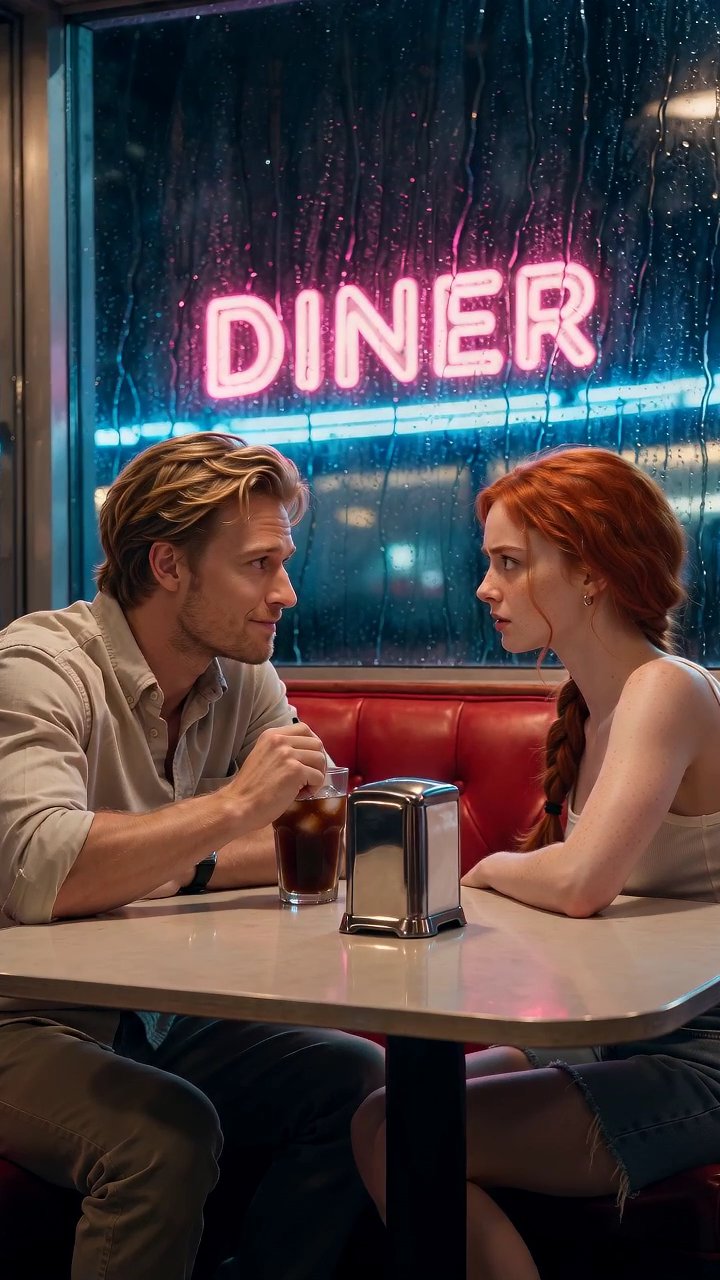
None of these layers require you to remember anything. Pick the character, and the references come along. Ask for a suggestion, and it reads the prior synopses. The practical effect is that episode fourteen can reference the diner from episode three with the same booth and the same jacket, which is the kind of detail returning viewers notice and new viewers simply accept as a world that exists.
Vertical framing for serialized beats
Vertical drama is a close-up medium. A 9:16 frame holds one face well, two faces in a tight two-shot, and very little establishing geography. That constraint shapes the writing. Scenes in AI Drama Creator are four to fifteen seconds each, and the best serialized beats fit that scale: a confession, a refusal, a text message read aloud, a door opening on the wrong person. Big set pieces are implied through reaction rather than shown.
Episodes are stitched from their scenes on the server into a single 9:16 MP4, which means the episode is edited at the outline stage. The order of cards and scenes is the cut. When you want a stronger act break, you add a scene or trim one, and the stitch reflects it. There is no separate editing pass to schedule, which is what keeps a daily cadence realistic.
Private until you post
A serialized run usually has episodes in several states at once: three finished, one in production, six outlined. All of it is private by default. Scenes, stitched episodes, synopses, and the cast library are visible only to you. Publishing is a decision you make per episode, which suits a schedule where you may finish Thursday on Tuesday and want it to sit until its day.
Costs are predictable in the same way. A Standard 720p scene is 6 credits per second, library images are 3 credits, a next-episode suggestion is 1 credit, and a stitch is 2. A daily run of short episodes fits the Season plan at $29 a month with 1000 credits; a lighter schedule fits the Episode plan at $9 with 250. New accounts start with 2 free credits, and the one-time packs on the billing page cover a heavy finale week.